HeyBuddy Club
- 4.5
- Rating
- 10.00K
- Installs
- Free
- Price

 Analysis by App-foxy
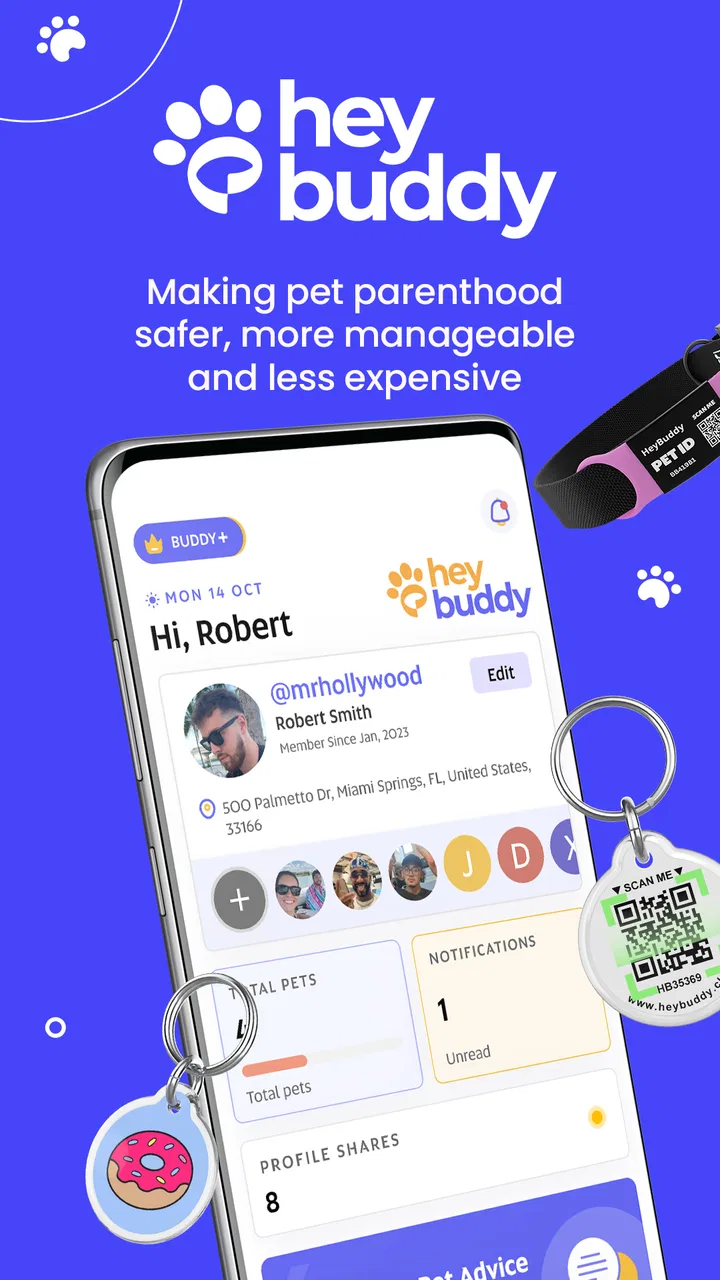
Pet apps often feel useful on day one because they promise to put everyday care in one place. The harder test comes later: does the app still help when the novelty has gone, routines become messy, and pet care needs to fit around work, errands, travel, and family life? I spent time looking at HeyBuddy Club with that question in mind. It is a free lifestyle app from HeyBuddy Club, aimed at making pet parenthood easier to manage, and its strongest appeal is its potential to give scattered responsibilities a more approachable home.
My first impression was positive but measured. The app feels designed for people who want a friendlier way to think about caring for a pet rather than another complicated tool demanding constant attention. That distinction matters. Pet owners do not usually need more digital noise; they need timely reminders, useful context, and a simple routine they can actually maintain. HeyBuddy Club is most interesting when it supports those habits without turning pet care into a second administrative job.
The app is free to start, carries a Teen content rating, and works on Android devices running version 7.0 or later. Its current version is 3.0.2, which makes it accessible to people using older compatible phones as well as newer devices. It has reached over ten thousand installs and holds a 4.5 average from around 1.7 thousand ratings, with hundreds of written reviews. Those figures suggest that the concept has found an audience, although popularity alone does not answer the more important question: whether it remains worthwhile after the first enthusiastic week.
You May Also Like

 Pandora - Music & Podcasts
Pandora’s Music Is Easy to Start, but Harder to Recover
Pandora’s strength is its low-effort path from a seed to a station. Its weak spot is how much confidence it asks you to place in connection, setup, and quiet recovery.

 8 Ball Pool
 Is Built on Rivalries, Rematches, and Routine
A close look at the rivalries, rematches, shared routines, and unanswered safety questions that turn a quick pool match into a persistent mobile community.

 Samsung Music
’s Quiet Strength Is Playing What You Already Own
Its reach comes less from spectacle than from dependable access to a personal library. That simplicity is both the app’s strongest retention engine and its ceiling.

 AccuWeather: Weather Radar
AccuWeather Review: A Quick, Clear Forecast for Everyday Decisions
For everyday plans, the best forecast is the one you can understand quickly. AccuWeather makes rain timing, radar, and local conditions easy to act on, with a few trade-offs.

 Hill Climb Racing
Why Hill Climb Racing Still Turns Crashes Into One More Run
A tiny car, a bumpy hill and one more upgrade: Hill Climb Racing keeps resurfacing because its simple chaos makes every near-miss feel personal.

 AliExpress - Shopping App
AliExpress Makes Global Shopping Feel Personal, but Shoppers Bear the Risk
AliExpress turns a global marketplace into a pocket-sized discovery engine. Its reach is useful, its shopping loop compelling, and its trade-offs easy to miss.
More From Our News Desk
View All News


What feels useful during the first week
The first week is where HeyBuddy Club has the easiest job. New users are naturally motivated to explore anything that might simplify feeding, routines, appointments, or general pet responsibilities. I found the app most appealing when treating it as a central starting point rather than expecting it to replace every specialist service a pet owner might use.
That is an important way to approach it. A lifestyle app can be valuable even when it does not perform every possible pet-related task. Its role is to reduce the mental effort of remembering what matters and deciding where to look next. If you are welcoming a pet into your home, adjusting to a new routine, or trying to become more consistent with an existing one, a single familiar place can make the early learning curve feel less scattered.
For a first-time pet owner, the benefit is less about discovering one magical feature and more about creating a dependable point of reference. I would begin by setting up only the information and routines I genuinely expect to use. Adding everything immediately is a mistake because it creates clutter before I know which parts of the app fit my household. A smaller setup is easier to review, easier to trust, and more likely to survive beyond the initial burst of enthusiasm.
A realistic example would be a person who leaves home early, shares pet duties with a partner, and often remembers tasks only when something triggers the memory. HeyBuddy Club can become part of the handoff routine: check what needs attention before leaving, confirm what has already been handled, and use the app as a prompt instead of relying on a conversation that may be forgotten. The value here is not dramatic automation. It is the reduction of small gaps that can appear when two people both assume the other person took care of something.
I also see a useful role for the app during changes in routine. A move, a new work schedule, a pet joining the household, or a period of travel can make familiar habits unreliable. In those moments, an app that keeps pet-related thinking visible may be more useful than a notebook hidden in a drawer. The trade-off is that the benefit depends on consistent input. If I stop checking or updating it, the app cannot compensate for that loss of attention.
Compared with the usual alternatives, HeyBuddy Club sits between a general notes app and a highly specialized pet-care service. A notes app is flexible but gives little structure; a specialist service may offer deeper tools but can feel excessive for someone who simply wants everyday organization. HeyBuddy Club is better suited to the middle ground, where the owner wants pet-focused support without building an elaborate system.
That middle position is also its first limitation. If I already have a carefully maintained calendar, shared task list, veterinary portal, and household reminder system, adding another app may not simplify anything. It could instead divide information across several places. I would use HeyBuddy Club when its pet-centered approach makes decisions easier, not merely because it is available.
How to get a fair trial instead of a novelty tour
My practical advice is to judge the app through one complete routine rather than by tapping through every screen. Choose a recurring responsibility that is easy to forget but important enough to matter. Use the app around that responsibility for several days, then ask whether it reduced uncertainty or simply gave you another place to check.
This test reveals something a quick store visit cannot: whether the app fits the rhythm of your household. A useful setup should make the next action clearer. It should not require a long session every time you open it. I would also avoid entering speculative information just to make the profile look complete. The most dependable pet-care system is usually the one built from facts and habits I can realistically maintain.
Another non-obvious tip is to treat the first week as a configuration period, not a commitment to use every available part of the app forever. Keep notes about which screens or prompts actually change what you do. If a section never affects a decision, it may not deserve a place in your regular routine. This approach protects the app from becoming a digital junk drawer.
Does the value hold from month to month?
The monthly question is more demanding because pet care is repetitive. A good app must earn attention through small, dependable improvements rather than constant novelty. In my view, HeyBuddy Club has a chance of doing that for owners who want a lightweight pet-focused companion, but its lasting value depends heavily on whether it becomes part of an existing habit.
I would not open it randomly throughout the day hoping to discover a reason to return. Instead, I would attach it to a moment that already happens: preparing for the morning, checking the household schedule, coming home, or planning the week. Habit stacking is especially useful here because pet care already contains natural anchors. The app does not need to create an entirely new routine if it can make an existing one more organized.
This is where the difference between a helpful tool and a temporary download becomes clear. During the first week, curiosity supplies motivation. After a month, only practical value remains. If the app helps me remember, coordinate, or review pet-related responsibilities with less friction, I am more likely to keep it. If it merely repeats information I already know without improving my decisions, I will gradually stop opening it.
For multi-person households, the strongest long-term case is coordination. Pet care often fails through ambiguity rather than unwillingness. Someone assumes food was given, a task was completed, or an appointment was noted elsewhere. A shared pet-centered reference can reduce those assumptions, provided everyone agrees to use the same place. The app cannot solve a household communication problem if only one person updates it, so adoption by the people involved matters more than the number of available tools.
For a single owner, the value is different. I would look for reduced mental load rather than collaboration. The app is worthwhile if it lets me externalize recurring thoughts and return to them without reconstructing the whole week from memory. That can be particularly helpful during busy periods, when even simple responsibilities become harder to track.
There is also a useful seasonal perspective. An app may feel more valuable during a change in routine than during calm, predictable weeks. That does not make it useless in quiet periods, but it does mean I would judge it by how well it handles transitions, not only by how often I open it on an ordinary Tuesday. A tool that helps me re-establish order after disruption can earn its place even if it is not central every day.
HeyBuddy Club is free, which lowers the barrier to testing it. However, it includes optional in-app purchases ranging from $7.99 to $79.99 per item. That price range makes it important to decide what value I am actually receiving before paying for anything. I would first establish a repeatable free workflow and only consider an upgrade if it removes a specific limitation that affects my routine. Paying to explore vague promises is not a good long-term strategy for any lifestyle app.
The free entry point also makes the app easier to recommend to a friend who is unsure about committing. They can see whether the pet-focused approach suits them without treating the download as a major purchase. Still, “free” does not mean costless in practice: time spent configuring, checking, and maintaining an app is also a cost. That is why the month-to-month test should focus on saved effort, not just the absence of an upfront charge.
Where it fits beside ordinary alternatives
A paper planner remains better for people who enjoy writing by hand and want a broad household overview. A general calendar is often better for appointments that involve several family members or external commitments. A notes app is better when complete flexibility matters more than pet-specific organization. HeyBuddy Club makes the most sense when those options feel too general and specialist tools feel too heavy.
I would also avoid using it as a substitute for professional advice or urgent care. A lifestyle app can help organize responsibilities, but it should not become the authority for medical decisions or emergencies. In those situations, a veterinarian or established professional service is the better choice. This is not a criticism of HeyBuddy Club; it is simply the boundary between organization and expertise.
The real maintenance burden
The maintenance burden of a pet app is easy to underestimate. Every system begins cleanly, then routines change. Feeding arrangements shift, household members travel, pets age, and information that once mattered becomes outdated. HeyBuddy Club can only remain useful if I occasionally review what I have entered and remove anything that no longer reflects life at home.
My recommended workflow is a short weekly check rather than constant editing. I would look for stale tasks, duplicated reminders, and routines that have moved to a different time. This is a small investment, but it prevents the app from presenting an old version of the household. A system that is technically organized but practically outdated can create more confidence than accuracy, which is worse than having no system at all.
There is a second maintenance issue: deciding what belongs in the app. If I put every pet-related thought into it, the important items can disappear among low-priority details. I would reserve it for information and routines that benefit from being revisited. Temporary notes can live elsewhere if they do not need a lasting place. This selective approach is one of the best ways to keep the app from becoming tiring.
Shared use adds another layer. If several people rely on the same information, someone needs to take responsibility for checking that it remains current. That does not mean one person must do all the pet care, but it does mean the digital record needs an owner. Without that responsibility, the app may look shared while quietly becoming unreliable.
Notifications and reminders, where relevant to a user’s setup, should also be treated carefully. Too few prompts and the app disappears from daily life; too many and I begin dismissing them automatically. I prefer a small number of meaningful cues over a stream of interruptions. The best reminder is one that arrives close enough to an action to help, but not so often that it becomes background noise.
Device compatibility is a practical advantage for some households. Support for Android 7.0 and later means the app is not limited to people with the newest phones. That can matter when a family member uses an older device or when a dedicated household phone is not regularly upgraded. Even so, compatibility alone does not guarantee a smooth experience on every handset, so I would still judge the app by how naturally it fits the device I actually use.
Small habits that protect long-term usefulness
One effective habit is to review the app immediately after a meaningful change instead of waiting for confusion to appear. If working hours change or another person takes over a responsibility, update the routine while the new arrangement is still clear. This is more reliable than trying to reconstruct what happened after several missed checks.
A second is to use the app as a confirmation tool, not a replacement for awareness. I still want to notice changes in my pet’s behavior, appetite, energy, or comfort. Digital organization can support observation, but it should never make me less attentive. The app is strongest when it handles memory and coordination while I handle judgment.
A third is to set a review point after several weeks and make a deliberate decision: keep the current setup, simplify it, or stop using it. That may sound obvious, but it prevents passive accumulation. If HeyBuddy Club is earning its space, the decision will be easy to explain in practical terms. If not, removing it is better than keeping an unused system out of habit.
What may cause fatigue over time
The biggest source of fatigue is duplication. If I must enter the same appointment, task, or piece of information into HeyBuddy Club and another system, the app needs to provide a clear benefit in return. Otherwise, I am maintaining two records for one responsibility. This is the main reason I would hesitate to recommend it to someone who already has a reliable shared calendar and task workflow.
Another risk is the emotional pressure that can come from turning care into a checklist. Some owners appreciate visible structure; others may feel judged by a list of unfinished items. HeyBuddy Club is a better fit for the first group, especially people who find reassurance in external reminders. If checking boxes makes pet care feel rigid or stressful, a simpler note or calendar may be healthier and more natural.
There is also a difference between useful repetition and stale repetition. Recurring responsibilities are exactly what an app should help with, but repeated prompts lose their impact if they do not reflect real changes. I would rather have a modest setup that stays accurate than a detailed one that gradually becomes ignored. This is why periodic cleanup is not optional maintenance; it is part of the app’s usefulness.
Paid options can create another point of friction. The range from $7.99 to $79.99 per item is broad enough that I would want to understand the practical reason for any purchase before proceeding. A purchase should save meaningful time or unlock a function I will use regularly. If it only makes the app feel more complete, I would skip it. The free version is the right place to determine whether the underlying habit works.
Some users may also find the app too narrow. If I want a full household command center covering bills, appointments, shopping, medication, and family scheduling, a broader productivity platform may be better. If I need detailed veterinary records or professional clinical communication, a specialist service is likely more appropriate. HeyBuddy Club’s focus is an advantage only when that focus matches the problem I am trying to solve.
The Teen rating is worth noticing for families deciding how to introduce the app to younger users. It is not a reason to avoid the product, but it does mean parents should make their own judgment about whether the app fits the age and responsibilities of the person using it. In a shared household, I would treat the rating as one consideration alongside supervision and the maturity of the user.
My long-term verdict
After the initial appeal fades, HeyBuddy Club earns lasting space only when it becomes a quiet support for a real pet-care habit. I would not keep it installed simply because it is pet-themed or because the first setup feels satisfying. I would keep it if it reduces forgotten responsibilities, makes household coordination clearer, or gives me a dependable place to return to during changes in routine.
My recommendation is strongest for new pet owners, busy households, and people who want something more focused than a generic notes or calendar app. It is also a sensible low-risk trial because the app is free to start and supports older Android versions. The 4.5 average from around 1.7 thousand ratings and its growing install base provide encouraging signs, but my decision would still come from personal fit rather than public numbers.
I would be more cautious recommending it to experienced owners who already have a polished system. In that situation, the app must remove a specific frustration rather than simply offer another dashboard. I would also steer away from it as a primary solution for medical guidance, urgent concerns, or highly specialized record keeping. Those needs call for professional or purpose-built alternatives.
The most honest way to try HeyBuddy Club is to give it one clearly defined job for a few weeks. Keep the setup lean, attach checking it to an existing routine, and review whether it saves attention instead of consuming it. If it helps the household act with less uncertainty, it has earned its place. If it becomes another list that nobody trusts or updates, uninstalling it is the sensible outcome.
Overall, I see HeyBuddy Club as a promising everyday companion rather than an all-in-one answer to pet ownership. Its lasting value comes from discipline and fit, not novelty. The app is worth keeping when it makes responsible pet care feel lighter without making it feel mechanical. For the right owner, that is a meaningful improvement; for someone already well organized, the usual calendar, notes app, or specialist service may remain the better choice.
FAQs for HeyBuddy Club
01What is HeyBuddy Club and what can I do with it?
HeyBuddy Club is a social networking and community app designed to help users connect with people, discover conversations, and participate in a shared online environment. Depending on the available features in your region, you may be able to create a profile, interact with other members, join discussions, and explore community content. The experience is mainly focused on meeting people and staying socially engaged through the app.
02Is HeyBuddy Club free to download and use?
HeyBuddy Club can generally be downloaded without an upfront charge, but some features may depend on the app’s current membership model. Certain interactions, premium tools, subscriptions, or in-app purchases could require payment. Before confirming any purchase, check the pricing, renewal terms, and cancellation policy shown in the App Store or Google Play, as available options may differ between Android, iOS, and countries.
03Is HeyBuddy Club safe for meeting and talking to other users?
As with any social or community platform, HeyBuddy Club should be used with reasonable caution. Avoid sharing your home address, financial information, passwords, or private documents with people you have only met online. Review profiles carefully, use the app’s reporting or blocking tools when necessary, and be cautious of suspicious links or requests for money. Younger users should also follow applicable age and parental guidance requirements.
04Does HeyBuddy Club require an account or personal information?
You will likely need to create an account to access the main social features of HeyBuddy Club. Registration may involve information such as an email address, phone number, username, profile photo, or other details requested by the service. Before signing up, review the app’s privacy policy and permissions so you understand how your information may be collected, used, stored, and shared with service providers or other members.
05What should I check before downloading HeyBuddy Club?
Before installing HeyBuddy Club, check whether your device meets the required Android or iOS version and make sure you have enough storage space. It is also worth reviewing recent user ratings, update history, permissions, subscription details, and the developer’s support information. Because social apps can change their features and policies over time, confirm that the current version offers the type of community interaction you are looking for.
Pros
- Simple way to discover and join local social activities.
- Club listings can help users meet people with similar interests.
- Useful for finding communities beyond traditional social networks.
- Mobile access makes checking events convenient while away from home.
- Can help newcomers explore activities in an unfamiliar area.
Cons
- Available clubs and activities may vary greatly by location.
- Some features may require creating an account or sharing personal details.
- Event quality depends on the accuracy of information from organizers.
- Smaller communities may have limited activity or infrequent updates.
- Users should review privacy settings before interacting with new members.

HeyBuddy Club
Gallery